Safety topic
Crossings and supervision
Plan adult coverage at every crossing you cannot avoid. Practice hand signals and stopping as a group before you add students.
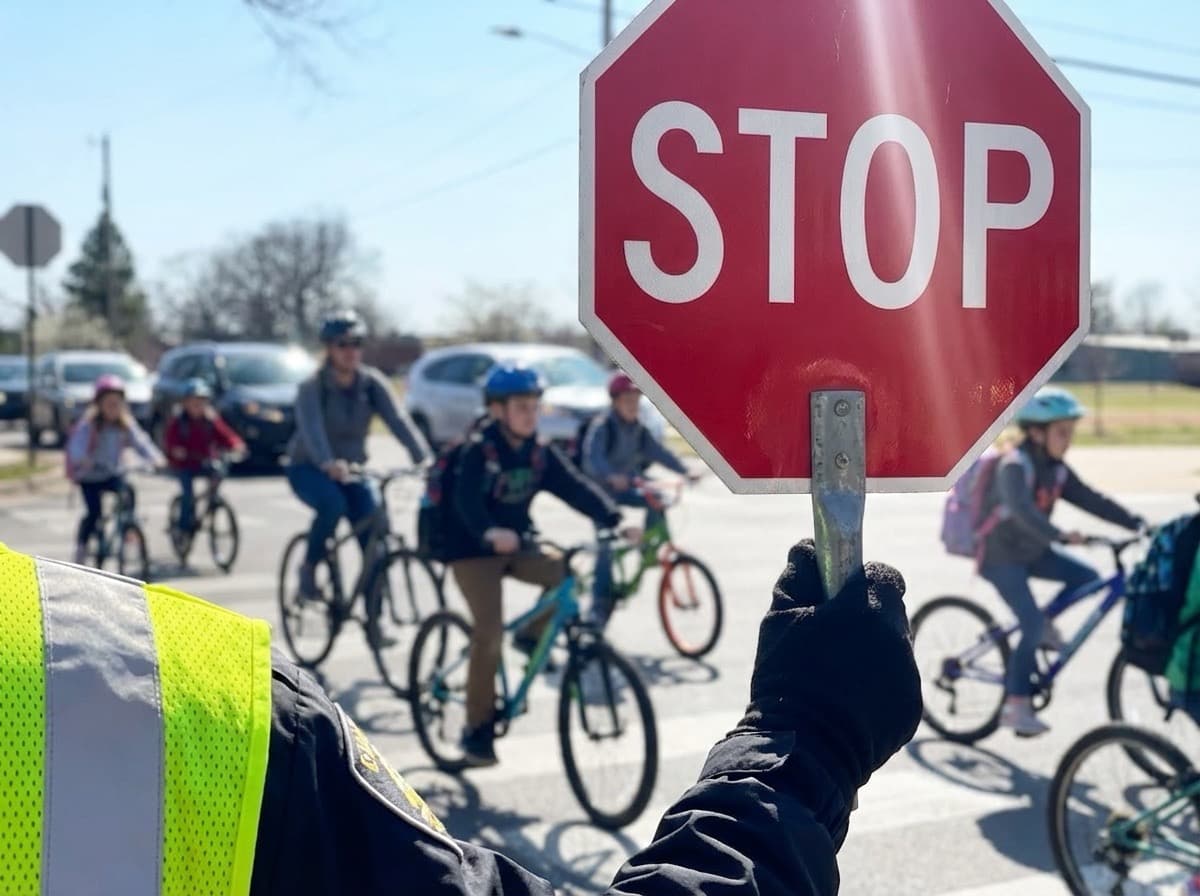
Design for the crossings you can actually support
A route is only as safe as the supervision plan behind it. If a crossing needs adult help every ride, make sure that support is realistic before you commit families to using the route.
When a complicated crossing cannot be staffed consistently, it may be better to reroute than to rely on best-case assumptions.
Assign adults to specific points
Supervision works better when each adult knows where to be and what decision they are responsible for. General promises such as 'we'll have enough adults' are weaker than a concrete crossing plan.
Document these decisions in your internal planning and reflect them in public stop notes when families need to understand where adults will be present.
- Identify crossings that always require extra support.
- Assign named adults or backup coverage to those locations.
- Practice the order in which the group approaches and clears the crossing.
Practice group behavior before high-stress segments
Students should know how to stop together, wait for instructions, and restart without scattering. Those habits are easier to build on a quiet practice ride than at a busy morning intersection.
Leaders should model hand signals, regroup language, and where riders should look for direction during complex moments.